


Sri Lankan Food Explained: Everything You Need to Know About Black Pork Curry

Black Pork Curry is one of those dishes that makes people pause when they see it on the menu. What is it? Why is it black? It is a fair question and the answer says everything about what makes Sri Lankan cooking so different. Here is the full story.
Why Is It Called Black Pork Curry?
The name is exactly what it says. No mystery, no marketing. Just a dish that earned its name honestly through the way it looks and the way it tastes.
Known locally as Kalu Uru Mas Curry, kalu means black in Sinhala and uru mas means pork. The colour comes from a combination of dark roasted curry powder, black pepper, and goraka, a sour fruit native to Sri Lanka that deepens both the colour and the flavour in a way that is difficult to achieve with anything else.
The Spices That Make It Black
At the heart of Black Pork Curry is the roasting. Spices go into a pan on a low heat, stirred continuously until they turn a deep dark colour, then ground into a smooth spice blend that forms the foundation of everything. It is a process that takes time and attention. Rush it and you burn the spices. Get it right and you have something that tastes unmistakably Sri Lankan.
Black pepper, cloves, cinnamon, and goraka layer on top of that roasted base. The goraka brings a sourness that is completely its own, cutting through the richness of the pork and giving the curry a depth that is hard to achieve any other way. It is a fruit that grows on the island and does not travel particularly well, which is why you rarely taste it outside of Sri Lankan cooking.
At Kochchi we import our spices directly from Sri Lanka because the roasting, the goraka, the particular balance of the blend: all of it depends on ingredients that are grown and dried on the island. That is not something you can replicate with a local substitute and we have never tried to.
The Pork and Why It Matters
Black Pork Curry is traditionally made with fatty cuts of pork, and the fat is not incidental. It renders down into the spiced gravy during the long, slow cooking process, creating a sauce that is thick, glossy, and carries every note of the spice blend all the way through the meat.
At Kochchi we use Scottish pork belly because the quality of the meat genuinely makes a difference in a dish that is built on slow cooking. When the pork is good to begin with, everything that follows is better for it. Sri Lankan spices, Scottish pork, cooked low and slow until it barely needs a knife.
Black Pork Curry is something of a calling card in Sri Lanka. Fragrant and sour, earthy with cloves and the deep tang of goraka. It is the dish that surprises people most and the one they talk about longest after the meal.
How Sri Lankans Eat Black Pork Curry
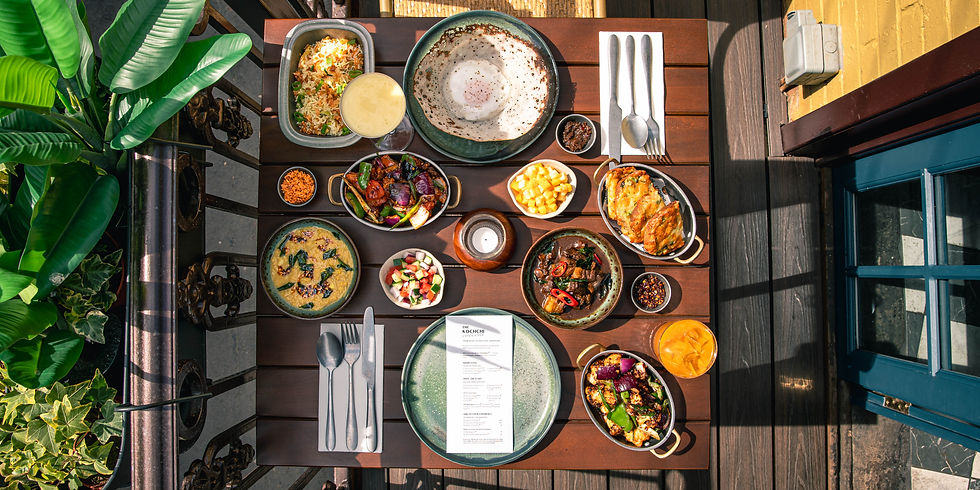
In Sri Lanka, Black Pork Curry is never eaten alone. It is part of a spread, and the way you build that spread changes the experience completely. This is the part most people outside Sri Lanka do not know, and it is the part that makes the whole meal make sense.
With Hoppers
A hopper is a thin, bowl-shaped Sri Lankan crepe made from fermented rice flour and coconut milk, cooked until the edges turn lacy and crisp while the centre stays soft. The soft centre soaks up the dark spiced gravy while the crisp edges give you something to hold onto. Light, delicate, and completely at odds with the intensity of the Black Pork Curry, which is exactly why the combination works so well. At Kochchi you can order a Classic Hopper or an Egg Hopper, and either one alongside the Black Pork Curry is a very good decision.
With Roti
Sri Lankan roti is a layered flatbread cooked on a hot griddle, made for scooping, wrapping, and tearing. It is thicker and more substantial than a hopper, which means it handles the weight of the curry in a different way. Tear it by hand, scoop up a piece of pork and some gravy, and eat it while it is still warm. That is all the instruction you need.
With Kotthu
Our Black Pork Kotthu takes everything that makes the curry great and folds it into chopped godamba roti on a hot griddle with fresh vegetables. The spiced gravy works its way into every piece of roti until the whole thing becomes one deeply satisfying plate of food. A different way of eating the same boldness, and one of the most ordered dishes on the menu for a reason.
With Rice
With steamed rice it is the classic pairing. The rice absorbs the dark spiced gravy and every mouthful is different depending on what else is on the plate. It is the combination that has been feeding Sri Lankans for generations and the one that makes the most sense when you want to eat the curry exactly as it was intended.

Do Not Forget the Sambols
No Sri Lankan curry spread is complete without sambols on the side, and Black Pork Curry in particular benefits from them. Not as an afterthought but as a genuine part of what makes the meal work.
Pol Sambol, freshly grated coconut with onion, chilli, and lime, does something specific alongside Black Pork Curry. The brightness and freshness of the coconut cuts through the richness of the pork and keeps the palate sharp between mouthfuls. It is the reason the curry tastes just as good towards the end of the plate as it did at the beginning.
Seeni Sambol takes a completely different approach. Caramelised onions cooked slowly with Sri Lankan cinnamon and tamarind until they are rich, sweet, and deeply savoury. Where the Pol Sambol brings freshness, the Seeni Sambol brings another layer of depth. Together they give the curry the balance it was always designed to have.
Both are on the menu at Kochchi. Both are worth ordering.
A Meal Built Around Contrast
The reason Sri Lankan food works so well as a spread is that every element is designed to contrast with something else on the table. Rich and fresh. Soft and crispy. Slow cooked and vibrant. Spicy and sweet.
Black Pork Curry is the richest, darkest, most intensely spiced thing on the table. The hoppers are light and lacy. The sambols are fresh and bright. The roti is soft and warm. Every element has its role and every element makes the others better.
That contrast is not accidental. It is the whole point of eating Sri Lankan food the Sri Lankan way. And it is the reason a meal at Kochchi feels different from anything else in Glasgow.
Black Pork Curry at Kochchi
At Kochchi we have been making Black Pork Curry since the day we opened. Scottish pork belly, spices imported directly from Sri Lanka, slow cooked until it reaches the colour and depth that gives the dish its name.
At our flagship restaurant on Byres Road in Glasgow's West End it can be ordered as a curry with hoppers, roti, rice, and sambols on the side, or as Black Pork Kotthu if you want something a little different.
At Kochchi Edinburgh within Bonnie & Wild Marketplace you will find it as Black Pork Kotthu, a loaded Hopper, or a Rice Bowl, each one already built with sambols and your choice of roti or rice. Everything you need in one plate, ready to go.
Book your table at kochchi.co.uk.
Frequently Asked Questions
Why is Black Pork Curry black? The dark colour comes from a combination of dark roasted curry powder, black pepper, and goraka, a sour fruit native to Sri Lanka. The roasting process transforms the spices, giving the dish its distinctive colour and deep smoky flavour.
Is Black Pork Curry very spicy? It is bold and deeply spiced with a building heat from black pepper and chilli, but it is balanced by the richness of the pork belly and the sourness of the goraka. If you are sensitive to heat, pairing it with our Parippu, a gentle red lentil curry simmered with turmeric and coconut milk, is a great way to bring balance to the plate. If you are unsure, ask your server and we will point you in the right direction.
What is the best way to eat Black Pork Curry at Kochchi? With a hopper and both sambols on the side for the full Sri Lankan experience. You can also order it with steamed rice, roti, or as Black Pork Kotthu. The more of the menu you bring to the table, the better it gets. Sri Lankan food is designed to be eaten as a spread, with different dishes balancing and complementing each other. A rich curry needs a fresh sambol. A spiced roti needs a cooling dhal. That is simply how this food is meant to be enjoyed.
Is Black Pork Curry available at both Kochchi locations? Yes. You will find it at our flagship restaurant on Byres Road in Glasgow's West End and at Kochchi Edinburgh within Bonnie & Wild.
Where can I try authentic Black Pork Curry in Glasgow? At Kochchi on Byres Road in Glasgow's West End. Book your table at kochchi.co.uk.
